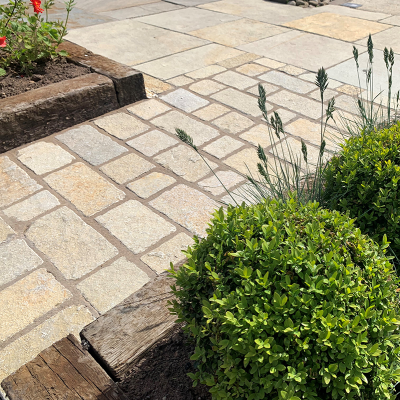


Our Exquisite Selection of Natural Stone Paving
Natural stone paving is a beautiful and long-lasting choice for garden patios and pathways alike. Whether you prefer greys and blacks or warmer, terracotta and clay tones, our collection of paving stones is sure to delight.
Featuring a wide range of flagstones from limestone and sandstone to slate and granite, our selection of natural paving is innately low-maintenance and non-slip, making it a great solution for those who love a stylish appearance, without intense upkeep.
Natural stone paving is unanimously the perfect choice for areas that are prone to becoming wet such as surrounding swimming pools, water features, hot tubs and any outdoor space during inevitable rainfall.
Many of our natural stone slabs are also excellent choices for indoor flooring, making them ideal for creating a seamless indoor-outdoor space to unwind and entertain in.
Frequently Asked Questions
To maintain the prestige of natural stone, regular and gentle cleaning is an important step.
- Routine Maintenance: Regularly sweep the surface with a soft-bristled brush to remove organic debris like leaves and twigs, which can release tannins and stain the stone if left to rot.
- Washing: For general dirt, use warm soapy water and a stiff brush. Try to use a pH-neutral stone cleaner; avoid generic household cleaners, bleach, or acidic products, as these can permanently discolour or burn stones like limestone.
- Algae and Moss: For stubborn green growth, use a specialist organic path cleaner.
- Power Washing: Use a low-pressure setting with a wide fan nozzle. Keep the wand at a 45-degree angle at least 1m away from the stone to avoid lifting the surface of the stone or damaging the jointing compound.
Laying natural stone requires more precision than concrete or porcelain due to the varying thicknesses of the slabs. Most of our paving slabs are calibrated to ensure an even thickness. We always recommend using a professional installer for the best finish.
- Groundwork: Dig out the area to a depth of approximately 150mm–200mm. Ensure the ground is firm and clear of any organic matter or large rocks.
- Sub-base: Lay a 100mm layer of granular sub-base. Use a vibrating plate compactor to compress the material until it is solid and level: this provides the structural integrity for your patio.
- Mortar Preparation: Create a wet mortar mix; the consistency should be firm enough to support the weight of the stone but wet enough to allow for adjustment.
- Priming: Brush a bonding agent or priming slurry onto the back of each slab immediately before laying. This prevents the stone from absorbing moisture from the mortar and ensures it sticks permanently to the bed.
- Laying: Spread the mortar roughly 40mm deep across the area for a single slab. Always use a full mortar bed rather than dabs (which can allow water to collect).
- Positioning: Place the slab onto the mortar and use a rubber mallet to tap it down. Leave a slight slope) away from any buildings to allow for water drainage.
- Spacing: Leave a consistent joint gap of 8mm–12mm between each slab. Use spacers or a piece of timber to maintain uniformity across the project.
- Pointing: After the mortar has cured for at least 24–48 hours, fill the joints with a traditional mortar mix or a modern brush-in resin jointing compound.
Natural stone paving refers to flagstones and slabs that are quarried directly from the earth, rather than being manufactured from concrete or porcelain. Popular varieties include sandstone, limestone,slate, granite and Yorkstone.
Because it is a 100% natural product, every slab features unique tonal variations, veining, and textures that can’t be perfectly replicated by man-made alternatives. Natural stone is used in landscaping for its durability, frost resistance, and the way it matures over time, often looking better as it ages and weathers.
The best sealer for natural stone is a breathable water-based sealer, which penetrates the stone's pores to protect it from within. This allows moisture to escape (preventing salt bloom or efflorescence) while creating an invisible barrier against oil, wine, and water-based stains.
At Westminster Stone, we generally recommend a matte or invisible finish to maintain the stone's raw aesthetic, though colour enhancers are also available if you wish to deepen the stone’s natural hues.
There are several distinct types of natural stone used for outdoor paving, each offering different aesthetic and functional benefits for your garden:
- Sandstone: Known for its wide range of colours and riven texture; often the most popular choice for traditional British gardens.
- Limestone: Offers a flatter, more consistent surface with sophisticated velvet-like textures.
- Slate: Provides a high-end, contemporary look with its dark tones and unique clefted surface.
- Granite: One of the hardest stones available, offering incredible slip resistance and a modern, speckled appearance.
- Yorkstone: The gold standard of British paving, famous for its historic use in London pavements and its extreme longevity.
You don’t always need to seal natural stone, but sealing can help reduce staining and make day-to-day maintenance easier, depending on the stone and where it’s used. If you’re comparing options, our natural stone guide is a helpful starting point.