


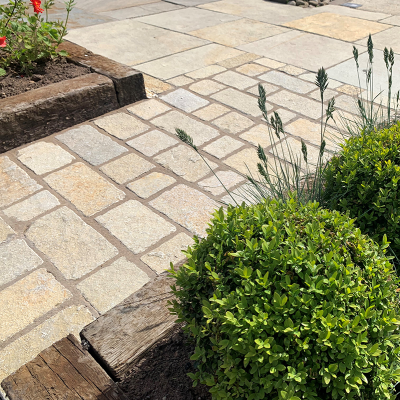

A well thought out and laid pathway design can create a real visual statement in any garden design.
In a range of natural stone, Westminster Stone’s Pathway Setts are durable and offer anti slip qualities making them functional as well as beautiful.
Frequently Asked Questions
The main difference between setts and cobbles is the shape and finish. Setts are typically more uniform and block-like (often cut or dressed to create flatter faces), making them easier to lay in neat patterns, while cobbles are usually more rounded and irregular, giving a more rustic, traditional look. The terms are sometimes used interchangeably, but setts generally implies a squarer, more consistent unit.
Garden pathway setts are small, durable paving blocks used to create paths with lots of character and definition. They’re ideal for edging, feature borders, curved pathways and traditional-style gardens, and they work beautifully when laid in patterns like rows, fans or coursing. Because they’re smaller than slabs, they can also help you create more intricate designs.
How to lay paving setts comes down to getting the base right. A well-compacted sub-base, a suitable bedding layer, and solid edge restraints to keep everything locked in place. Setts are usually laid in a chosen pattern, then jointed carefully so the surface stays stable and doesn’t loosen over time.
To maintain a sett pathway, sweep regularly to stop debris from building up in the joints and remove weeds early before they establish. In shaded or damp areas, occasional cleaning helps keep algae and moss under control, and topping up jointing material where appropriate keeps the pathway stable.
You don’t always need to seal paving setts, but sealing can help with stain resistance and make ongoing cleaning easier, particularly on driveways, dining areas or pathways under trees. Whether it’s worthwhile depends on the material (some stones are more porous than others) and how exposed the area is to staining and damp.
