Share
7 September 2026
How to Modernise a Period Home Without Losing Its Character
There’s a particular kind of pleasure in living in an older home. The wonky floors, the deep window reveals, the timber that’s settled over a century or two into something no new build can quite imitate. That character is also fragile. It rarely disappears through one dramatic mistake. More often it goes in a run of small, well-meant decisions, each sensible on its own and together a slow erosion of what made the house special. The good news is that comfort and character can coexist. With patience and the right choices, you can have the warmth, efficiency and low maintenance modern life expects while keeping everything that drew you to the house. Here’s how to modernise a period home.
Why Character Pays Its Way
It’s tempting to treat period features as a problem to be managed, although in practice they’re usually an asset worth protecting. Original details, sympathetic materials and a frontage true to the home’s age tend to support a property’s value, and buyers often pay a premium for character that feels genuine rather than bolted on.
That’s worth keeping in mind before you change anything. A sympathetically updated period driveway, for instance, can lift a whole house while still looking as though it’s always been there. One Cheshire homeowner shared how they swapped tired paving for traditional cobbles and flagstones chosen to match the existing materials, and the result reads as restoration rather than renovation. Updates done in keeping tend to add value, while careless ones quietly take it away.

Know What You’ve Got
Before lifting a floorboard, spend time understanding the house. Which features are original, which were added later, and which are doing a structural or practical job you might not notice until they’re gone? Sash windows, fireplaces, cornicing, flagstone floors and timber doors all carry the home’s history, and once stripped out they can be hard to recover.
A good rule is to repair before you replace. Many period features were built to last and to be mended, so a sticking sash or a worn floor is often a repair job rather than a write-off. Keeping what you can protects the detail that gives the house its worth, and tends to cost less than starting again too.
Comfort You Can’t See
Most of the friction in older homes is invisible: draughts, cold walls, single glazing and heating that struggles to keep up. The instinct is to reach for modern fixes, but older buildings behave differently from new ones. They were designed to breathe, managing moisture through permeable materials, and the wrong insulation can trap damp and cause real damage over time.
The trick is to improve efficiency in a way the building can cope with. Historic England’s guidance on improving the efficiency of older homes is a sensible starting point, with practical advice on draught-proofing, secondary glazing and breathable insulation that warms a home without harming its fabric. Done well, these changes are felt every day and seen by no one, which is exactly what you want.
Honest Materials
Where new work is unavoidable, materials matter more than anything. The eye is quick to spot something that doesn’t belong: a plastic trim against old brick, a flat modern paint over lime plaster, a finish that’s a shade too perfect. Choosing materials that suit the age of the house keeps modern updates from announcing themselves.
That can mean lime in place of cement, timber in place of uPVC, and reclaimed or faithfully reproduced finishes in place of off-the-shelf substitutes. The Society for the Protection of Ancient Buildings offers free, independent advice on caring for a traditional building, including how to pick finishes that work with old fabric rather than against it. The aim is for new work to settle in quietly, so that in a few years you’d struggle to say where old ended and new began.
The Exterior and the Approach
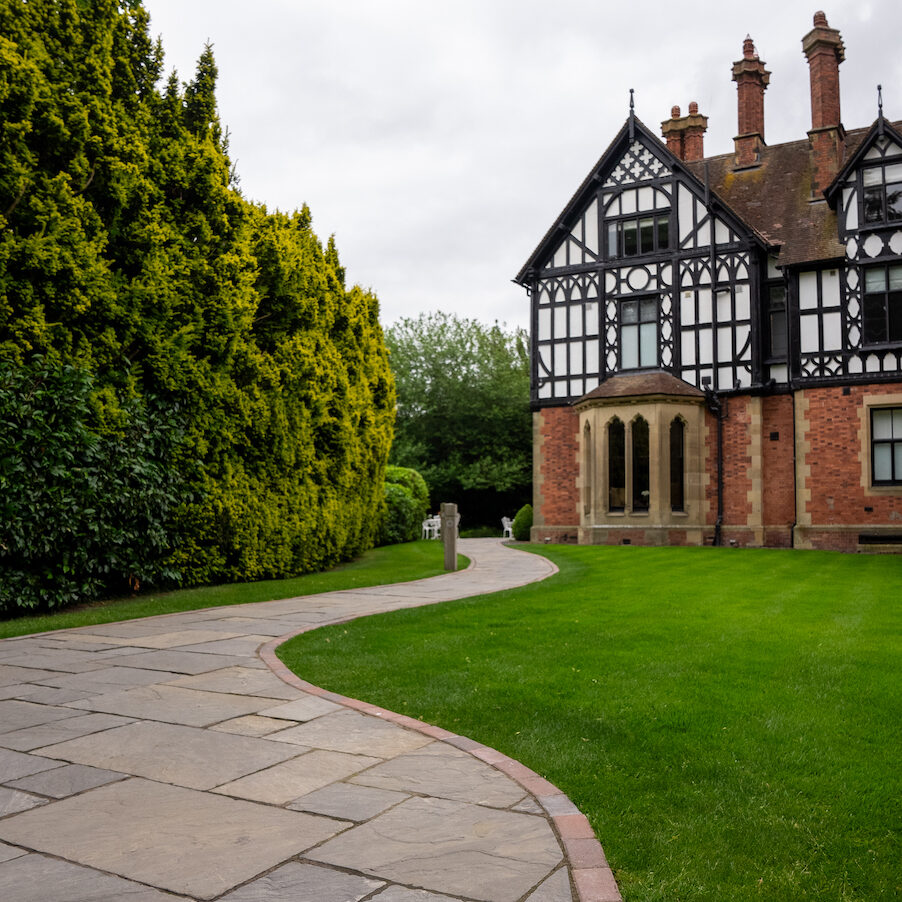
The front of the house is where character is most public and most easily lost. Paths, garden paving, boundaries, the front door and the garage door all sit together in a single view, and one jarring element can undo the rest. Natural stone paving, traditional cobbles and planting in keeping with the period do most of the heavy lifting.
The garage door is the part people most often get wrong, usually because the practical options have tended to look wrong on an older home. Real timber suits the architecture but demands regular upkeep, while modern materials can look exactly that: modern. This is where a low-maintenance door with a convincing timber finish earns its place. Specialist installers now offer wood-effect garage doors that resist the warping, cracking and repainting real wood demands, and that can be colour-matched to tie in with windows and trim. The result is a frontage that looks period-appropriate but behaves like a modern product, which is the balance this whole exercise is chasing.
When to Bring in a Specialist
Some projects need more than good taste. If your home is listed or sits within a conservation area, changes you’d assume were routine, such as replacing windows or altering the frontage, may need permission. It’s worth checking the rules for conservation areas before you commit, and speaking to your local conservation officer early, since a quick conversation at the start can save an expensive mistake later.
For anything structural or unfamiliar, a builder or architect with real heritage experience is worth the investment. They’ll know which techniques and materials suit the building, and they’ll spot the risks a generalist might miss.
A sympathetic finish
Modernising a period home comes down to understanding the building well enough to give it both comfort and character. Repair what you can, choose materials that belong, tuck the modern comforts where they can’t be seen, and treat the visible details with the respect they’ve earned. Do that, and you end up with a home that’s warmer, easier to live in and every bit as full of character as the day you fell for it.